How to care for linen, silk and wool in a humid climate
Humid air, air conditioning and long months in storage are hard on good fabrics. How to wash, dry and store linen, silk and wool so they last.
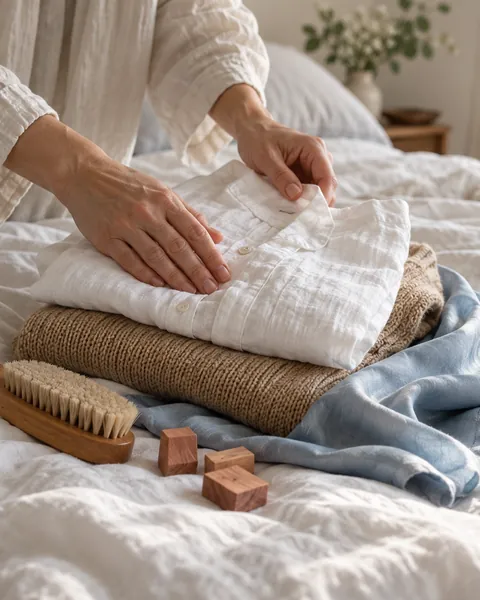
Humid air is hard on good clothes. Coastal humidity, air conditioning that goes on and off, and long months when warm clothes sit in a cupboard all add up. A shirt that smelled fresh in spring can come out musty in autumn, and a knit you loved can come out with a small hole you did not put there.
None of this needs special products or a lot of time. It needs a few habits, and a little knowledge of how linen, silk and wool each like to be treated.
The basics for any closet
Before the fabric-by-fabric part, a few rules help everything in your closet.
Give clothes room. A closet packed tight keeps damp air trapped between pieces. Leave a little space between hangers, and open the doors now and then to let air move.
Never put clothes away damp. Even slightly damp clothes in a closed cupboard are an invitation to a musty smell and to mildew. Let everything dry fully first, including the things you have just worn.
Keep worn and clean apart. Clothes you have worn once and plan to wear again are better on a hook or a chair for a few hours to air out than back on the rail beside clean things.
Use breathable storage. For anything you put away for a season, choose cotton garment bags or boxes that let air through. Plastic bags hold moisture in.
Help the air stay dry. Moisture absorbers, like silica gel packs or the refillable boxes sold for closets, help in a closed space. Change or dry them out as their instructions say.
Linen
Linen is one of the easiest fabrics to care for, and it gets softer the more you wash it.
- Washing. A gentle machine cycle at a cool or warm setting is fine for most linen. Do not fill the machine too full: linen needs room to move.
- Drying. Hang it to dry in the shade. Strong sun can fade colors over time. If you use a dryer, take linen out while it is still a little damp.
- Ironing. Linen irons best while slightly damp. Or let the creases be: they are part of linen’s charm.
- Storing. Fold it loosely, or hang shirts and dresses on wide hangers so the shoulders keep their shape.
Silk
Silk is stronger than it looks, but it does not like heat, rubbing or harsh soap.
- Check the label first. Some silk should only be dry cleaned. When it says so, follow it.
- Washing. For washable silk, hand wash in cool water with a gentle detergent made for delicates. Swirl it, do not scrub it.
- Drying. Do not wring silk. Roll it in a clean towel to press out the water, then dry it flat or on a padded hanger, away from direct sun.
- Ironing. Use a low setting on the reverse side, while it is still a little damp, or use steam held a short distance away.
- Small things that help. Let perfume and deodorant dry before you put silk on, as they can leave marks. Store silk where it will not rub against rough fabrics or zips.
Wool
In a warm climate, wool spends much of the year waiting. How you put it away matters as much as how you wash it.
- Wear more, wash less. Wool does not need washing after every wear. Air it overnight, then brush it gently with a clothes brush to lift dust.
- Washing. When it does need a wash, use cool water and a detergent made for wool, either by hand or on your machine’s wool cycle.
- Drying. Press out the water in a towel, then dry knits flat on a towel, gently pushing them back into shape. Hanging wet knitwear stretches it.
- Storing. Fold knits rather than hanging them. Coats and jackets can hang on shaped hangers.
- Moths. Moths are drawn to wool that has been worn and put away unwashed. Store wool clean, in a closed, breathable bag or box. Cedar blocks and lavender bags are a traditional extra step; they help most in a clean, closed space. Sand cedar lightly when it loses its smell.
The seasonal swap
In the UAE, it makes sense to swap your closet twice a year: knits and heavier pieces come out when the evenings cool, and go away again when the heat returns. A few minutes of care at each swap saves a lot of disappointment later.
- Wash or clean everything before it goes away.
- Make sure each piece is completely dry.
- Fold knits, and hang coats in breathable bags.
- Add cedar or lavender, and a moisture absorber for the box or shelf.
- Check the stored pieces once in the middle of the season.
It also helps to know what is packed away. It is easy to forget a favorite knit at the top of a cupboard and buy another one just like it. When Tiraaz opens, your closet in the app keeps every piece in one place, including the ones in a box for the summer: take a photo of a piece, and Tiraaz notes what it is and its color and keeps it with the rest.
When something goes wrong
A musty smell. Air the piece outside in the shade, then wash it as its label says. If the smell comes back, look at where it was stored, not only at the piece.
Small spots of mildew. Wash the piece as soon as you can and dry it fully, in the shade outdoors if possible. If the marks stay, especially on silk or wool, a good dry cleaner is the safest next step.
A moth hole. Check everything stored nearby, clean the shelf or box, and wash or clean the wool around it before it goes back.
Good fabrics are worth the small effort. Cared for well, linen, silk and wool get better with time.